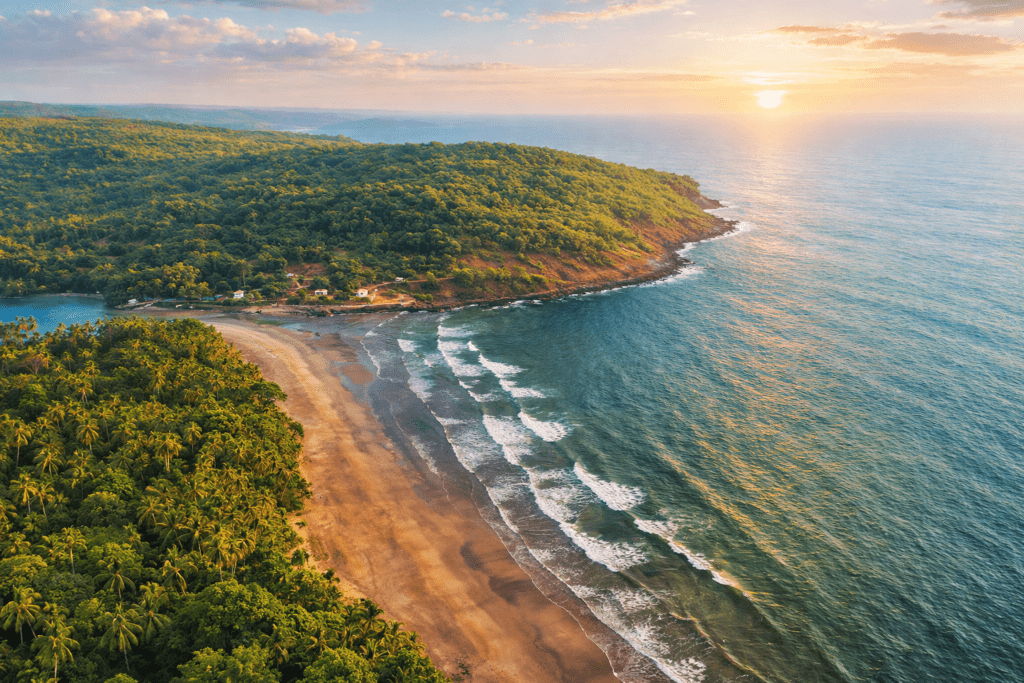
Kolthare Beach – Maharashtra’s Emerging Marine Biodiversity Hotspot & Eco-Tourism Destination
When people search for the best beaches in Maharashtra, they often focus on scenic beauty and sunsets. But along the pristine coastline of the Konkan region, something far more extraordinary is unfolding. Recent wildlife research has revealed that the coastal belt of Ladghar, Kolthare, and Dabhol is home to several newly identified and rare marine species, placing Kolthare Beach on the map as not just a scenic escape — but a powerful marine biodiversity hotspot in Maharashtra.
This discovery strengthens Kolthare’s position not only as a top beach near Dapoli, but also as a future hub for eco-tourism, marine research, and sustainable coastal travel.
A Landmark Marine Study in Konkan
A comprehensive ecological study focusing on the flora, fauna, and social use of natural resources in coastal towns such as Kolthare, Dabhol, Ladghar, and nearby villages has uncovered remarkable findings.
Wildlife researchers identified multiple rare and previously undescribed marine species along the shores of Kolthare and Ladghar Beach. These discoveries highlight the urgent need for species-based marine research in Maharashtra’s coastal areas and emphasize the ecological richness of the Konkan coastline.

For eco-conscious travelers and nature enthusiasts searching for eco-tourism destinations in Maharashtra, Kolthare Beach offers more than relaxation — it offers discovery.
Rare Marine Species Found Near Kolthare
Among the remarkable discoveries are:
-
The rare Sentinel Crab
-
The original white-patched Chhapgar’s Crab
-
The unique Bombay Doris Slug
-
Undescribed slugs believed to belong to the genus Tenellia
-
Previously unrecorded sponge species
-
Multiple coral species
-
Red Algae Chondria
-
The rare Pulicaris Snail
These species were recorded along the near-coast areas of Kolthare and Ladghar beaches, confirming that the quality and quantity of marine biodiversity along Kolthare shores is exceptionally strong.
Such findings elevate Kolthare beyond being just a tourist destination — it becomes one of the most biologically rich coastal zones in Maharashtra.
Intertidal Zones – Nature’s Hidden Laboratory
One of the key reasons for Kolthare’s rich marine life is its thriving intertidal zones. These are areas where the ocean meets land between high and low tides — crucial breeding grounds for aquatic species.
Intertidal zones around Kolthare Beach act as natural nurseries for marine life. This makes the region highly valuable for:
-
Marine biology research
-
Environmental education programs
-
Sustainable eco-tourism initiatives
-
Coastal biodiversity conservation
For travelers interested in nature-based tourism in Konkan, Kolthare offers a rare opportunity to witness a living marine ecosystem up close.
Mangroves & Coastal Ecology
Researchers also observed dense patches of mangroves along the shores of Kolthare and Ladghar. Mangroves play a critical role in:
-
Protecting coastlines from erosion
-
Supporting marine breeding cycles
-
Maintaining water quality
-
Acting as carbon sinks
While biodiversity was recorded as healthy, researchers also identified some invasive species in the Dapoli coastal region, possibly transported through ballast water from vessels. This highlights the importance of active monitoring and responsible coastal development.
Kolthare, therefore, stands at a crucial point — it has the potential to become a model eco-tourism and conservation-driven beach destination in Maharashtra.
Community Awareness & Beach Grading
An important part of the study involved engaging local villagers from Kolthare, Kharwadi, Ladghar, and nearby coastal settlements. Awareness programs are being conducted to educate residents about:
-
Protecting marine biodiversity
-
Responsible fishing practices
-
Sustainable coastal resource usage
-
Preventing pollution
The research team is also planning to introduce biodiversity-based beach grading, which can help position Kolthare as one of the top eco-friendly beaches in Maharashtra.
Such grading systems can attract educated tourists, marine researchers, conservationists, and nature lovers looking for authentic and sustainable travel experiences.
The Future of Eco-Tourism in Kolthare
Kolthare is no longer just a peaceful beach near Dapoli — it is emerging as a premium eco-tourism destination in Konkan.
To preserve and upscale its natural wealth, coordination is essential among:
-
Educated tourists
-
Nature lovers
-
Animal conservationists
-
Local forest guides
-
Coastal villagers
-
Government authorities
With the right conservation-driven tourism strategy, Kolthare Beach can become one of the best sustainable beach destinations in India.
Eco-tourism programs, marine education camps, biodiversity walks, and guided intertidal explorations can transform Kolthare into a world-class coastal research and tourism hub — while maintaining its natural charm.
Why Kolthare is More Than Just a Beach
When you visit Kolthare, you are not just walking on golden sand. You are stepping onto one of Maharashtra’s richest coastal ecosystems.
You are witnessing:
-
Rare crabs and marine slugs
-
Unique sponge and coral formations
-
Healthy mangrove ecosystems
-
Thriving intertidal breeding zones
Few beaches in Maharashtra offer this combination of scenic beauty and scientific significance.
Kolthare is not only one of the best hidden beaches near Dapoli, but also one of the most promising marine biodiversity hotspots in Konkan.
Frequently Asked Questions (FAQs)
1. Why is Kolthare Beach important for marine biodiversity?
Kolthare Beach has recently been identified as a hotspot for rare and newly sighted marine species, including crabs, slugs, corals, and mangroves, making it ecologically significant.
2. What rare species were found near Kolthare?
Researchers recorded species such as the Sentinel Crab, Chhapgar’s Crab, Bombay Doris Slug, Pulicaris Snail, and several undescribed sponge and slug species.
3. What are intertidal zones and why are they important?
Intertidal zones are areas between high and low tides where marine breeding occurs. These zones around Kolthare support rich aquatic biodiversity.
4. Can Kolthare become an eco-tourism destination?
Yes, with sustainable tourism practices, biodiversity grading, community awareness, and coordinated conservation efforts, Kolthare has strong potential to become a leading eco-tourism destination in Maharashtra.
Kolthare Beach is not just a hidden gem — it is a living ecosystem waiting to be respected, explored, and protected.
For those seeking the best beaches in Maharashtra with ecological significance, Kolthare stands apart — where conservation meets coastal beauty.